Engine components can be quite perplexing to your customers if they’re not familiar with the fundamental purpose and function of each part. As they explore the complexities of an engine, they may come across various unfamiliar pieces. This blog aims to help you educate your customers about engine parts, with a special focus on the valve train components.
Grasping the roles of engine parts is crucial for diagnosing engine problems. This knowledge will enable customers to better identify which part(s) is malfunctioning when they encounter engine failure. Let’s delve into the purpose and functionality of valve train components:
Purpose of Valve Train Components

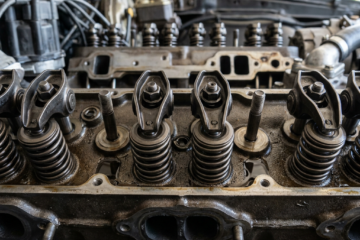
Overhead valve (OHV) engines feature valve train components such as valve springs, rocker arms, pushrods, and lifters. In contrast, overhead camshaft (OHC) engines include valve springs, rocker arms, and lifters. The main distinction lies in the camshaft’s location: is it positioned on top of the head without pushrods, or is it situated below the head with pushrods? The primary function of valve train components is to open and close the valves, allowing fuel intake through the intake valve and exhaust release through the exhaust valve.
Valve Train Component Functionality – OHV
In an OHV engine, the valve train process initiates when the camshaft begins to rotate. At the peak of the camshaft lobe, the lifter rises, which in turn elevates the pushrod. As the lifter lifts the pushrod, it exerts pressure on the underside of the rocker arm, which is balanced between the pushrod and the valve spring. When the pushrod pushes against the rocker arm, the arm pivots downward, compressing the valve spring and opening the exhaust valve to expel exhaust gases. Once the camshaft lobe returns to its original position, the valve spring relaxes, causing the valve to close and resetting all valve train components to their initial state. The OHV engine, like the OHC engine, is synchronized with the overall engine cycle through the timing set.
Valve Train Component Functionality – OHC
The operation of an OHC engine begins similarly to that of an OHV engine. As the camshaft rotates, the process commences. With the camshaft located at the top of the head, there is no need for pushrods, as it makes direct contact with the lifters. The highest point of the camshaft lobe lifts the lifters, which then apply pressure to the underside of the rocker arms, compressing the valve springs. Once the camshaft returns to its starting position, the process is ready to begin anew.
While there may be variations in valve train components based on engine types that haven’t been covered here, this overview provides insight into the valve train components of popular engines. With an understanding of their purpose and functionality, you will find it easier to identify and address engine-related issues.
Identifying Suitable Enginetech Parts for Your Engine Type.
Make sure to review the User Engine description in our online catalog, where we specify whether a component is intended for OHC or OHV engines.