Engine Parts 101: Understanding Valve Train Components
It’s an Encore! We’re bringing back content from one of our most popular blog articles, Engine Parts 101….
If you’re new to engine repair or rebuilding, it’s easy to feel overwhelmed by the number of components inside an engine. Learning what each part does is the first step toward understanding how an engine operates and how to diagnose problems when something goes wrong.
One of the most important systems inside an engine is the valve train. This collection of components controls the opening and closing of the engine’s valves, allowing air and fuel to enter the combustion chamber and exhaust gases to exit. Understanding how the valve train works can make it much easier to identify worn or malfunctioning parts during troubleshooting.
What is the Valve Train?
The valve train is responsible for operating the intake and exhaust valves in sync with the engine’s cycle. Depending on the engine design, the valve train may include:
Overhead Valve (OHV) Engines
OHV engines typically use:
Overhead Camshaft (OHC) Engines
OHC engines generally use:

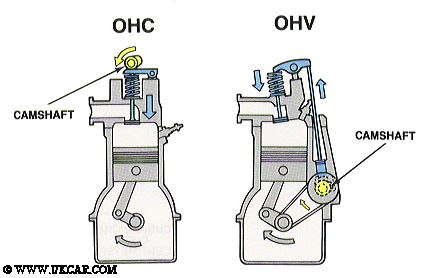
The primary difference between these two engine designs is the location of the camshaft. In an OHV engine, the camshaft is located inside the engine block and relies on pushrods to transfer motion to the valves. In an OHC engine, the camshaft is positioned above the cylinder head, eliminating the need for pushrods.
Regardless of the design, the valve train’s job remains the same: opening and closing the valves at precisely the right time to allow the engine to breathe efficiently.
How the Valve Train Works in an OHV Engine
In an OHV engine, the process begins with the rotating camshaft. As a camshaft lobe reaches its highest point, it pushes the lifter upward. The lifter then moves the pushrod, which transfers that motion to the rocker arm.
The rocker arm acts as a pivot between the pushrod and the valve spring. As the pushrod pushes upward, the rocker arm pivots downward, compressing the valve spring and opening the valve. This allows either intake air and fuel to enter the cylinder or exhaust gases to leave, depending on which valve is being activated.
As the camshaft continues to rotate and the lobe moves away from its peak position, the valve spring expands back to its normal state. This closes the valve and returns the rocker arm, pushrod, and lifter to their starting positions. The entire process is synchronized with the engine’s operation through the timing system.

How the Valve Train Works in an OHC Engine
The valve train in an OHC engine operates on the same basic principle but with fewer components.
Because the camshaft is mounted directly above the cylinder head, it can act directly on the lifters or rocker arms. As the camshaft rotates, the lobe contacts the lifter, causing it to move and apply pressure to the rocker arm. The rocker arm then compresses the valve spring and opens the valve.
Once the camshaft lobe rotates past its highest point, the valve spring returns the valve and related components to their resting positions. The cycle then repeats continuously while the engine is running.
By eliminating pushrods, OHC engines often reduce valvetrain weight and complexity, which can improve efficiency and performance.
Final Thoughts
While valve train designs can vary between manufacturers and engine families, the fundamental purpose remains the same: controlling the precise opening and closing of the engine’s valves. Understanding the role of lifters, pushrods, rocker arms, valve springs, and camshafts can help you identify components more easily and diagnose engine issues with greater confidence.